Industry Context: Why the AI Software Market Has Fundamentally Shifted#
Gartner predicts that by 2026, over 80% of enterprise software will embed AI capabilities as a core feature rather than an add-on.
💡 Key Insight
AI adoption is shifting from experimentation to core infrastructure,
meaning businesses without AI integration risk falling behind competitors.
From Automation to Intelligent Systems#
Traditional automation replaced repetitive, rule-based tasks—scheduling
emails, exporting reports, routing support tickets. AI goes further. Intelligent
systems learn from data, adapt to new inputs, and make decisions without
manual reprogramming.
The difference is significant: a rule-based chatbot answers fixed questions;
an AI-powered chatbot understands context, resolves complaints, and
improves with every conversation. This shift means AI is no longer just a
cost-reduction lever. It is now a revenue driver.
Businesses that implement AI in sales forecasting, content personalisation,
or customer retention report measurable gains in revenue—not just lower
overhead.
Market Data That Defines the 2026 Landscape#
According to McKinsey’s Global AI Research, companies implementing AI at scale report measurable cost reductions and revenue growth improvements within the first year.
📊 AI Adoption Statistics (2026)
- 70–90% of businesses now use at least one AI tool
- 77% of SMBs report saving 100+ hours annually per employee
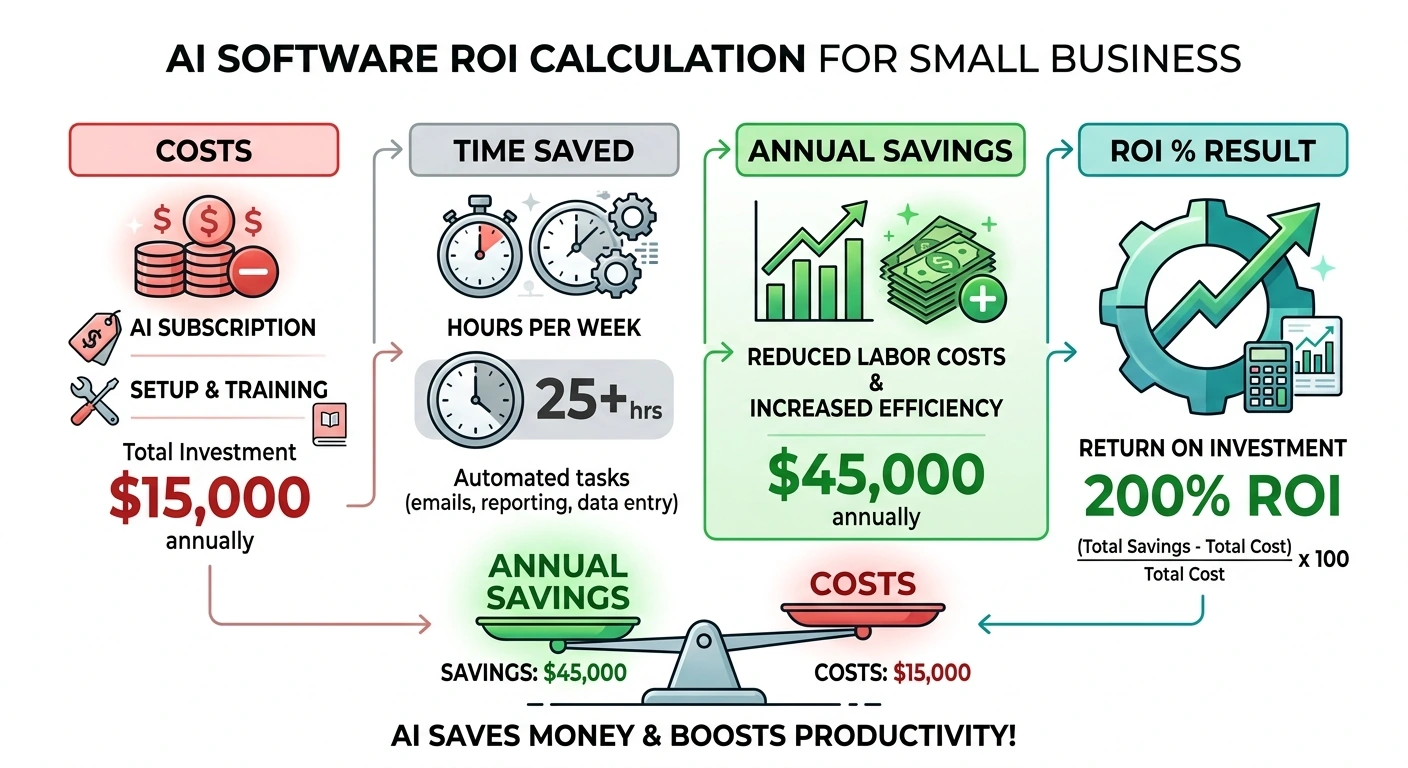
- Companies generate $3.50–$4 ROI for every $1 invested in AI
According to McKinsey's Global AI research, companies implementing AI at
scale report measurable cost reductions and revenue growth improvements
within the first year. Gartner predicts that by 2026, over 80% of enterprise
software will embed AI capabilities as a core feature rather than an add-on.
AI is not a cost. It is a multiplier.
The 2026 trends reshaping how companies compete include AI agents
capable of executing multi-step autonomous tasks, hyper-personalisation at
SMB scale, and vertical-specific platforms purpose-built for industries like
legal, healthcare, and logistics.
Industries Seeing the Fastest AI Adoption#
AI adoption is accelerating across sectors, but several industries are seeing
particularly rapid uptake:
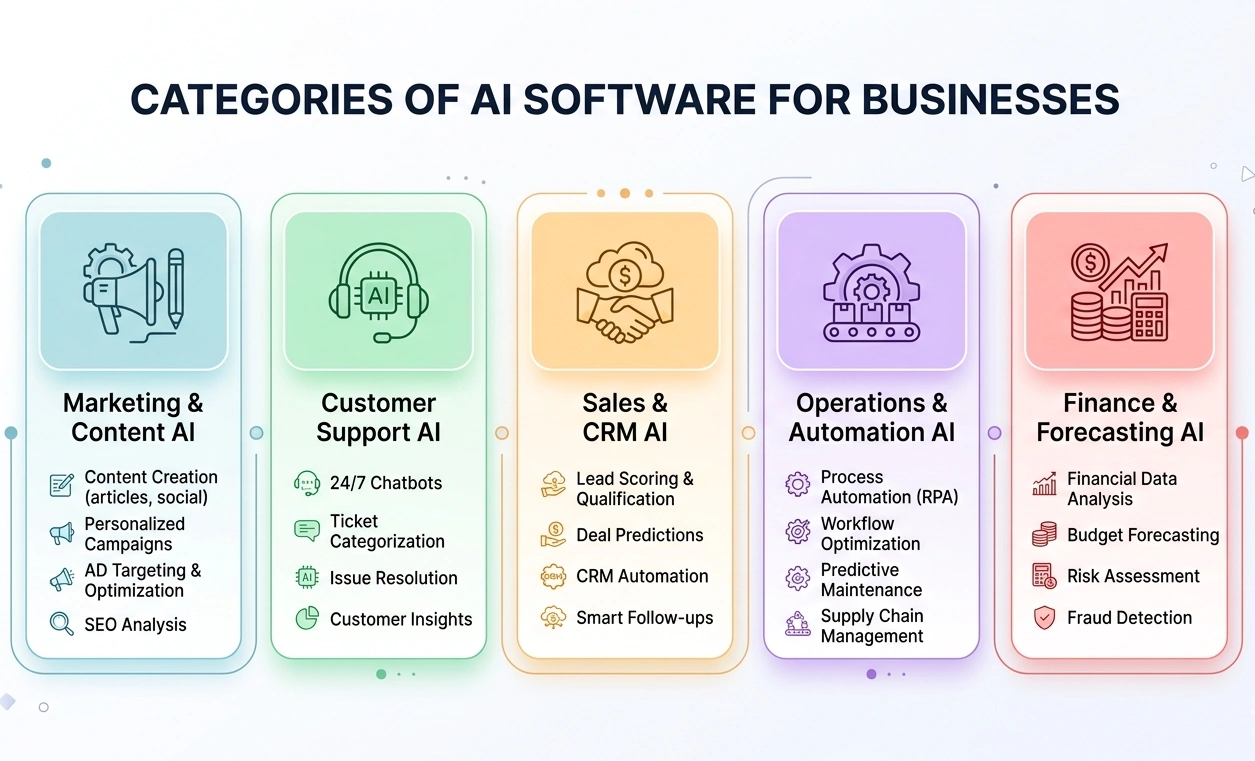
- Retail and eCommerce: Personalised recommendations, inventory
forecasting, fraud detection
- Healthcare: Administrative automation, patient triage support, claims
processing
- Financial services: Credit risk assessment, fraud prevention,
automated reporting
- Marketing agencies: AI content generation, campaign optimisation,
audience segmentation
- Logistics and supply chain: Route optimisation, demand
forecasting, warehouse automation
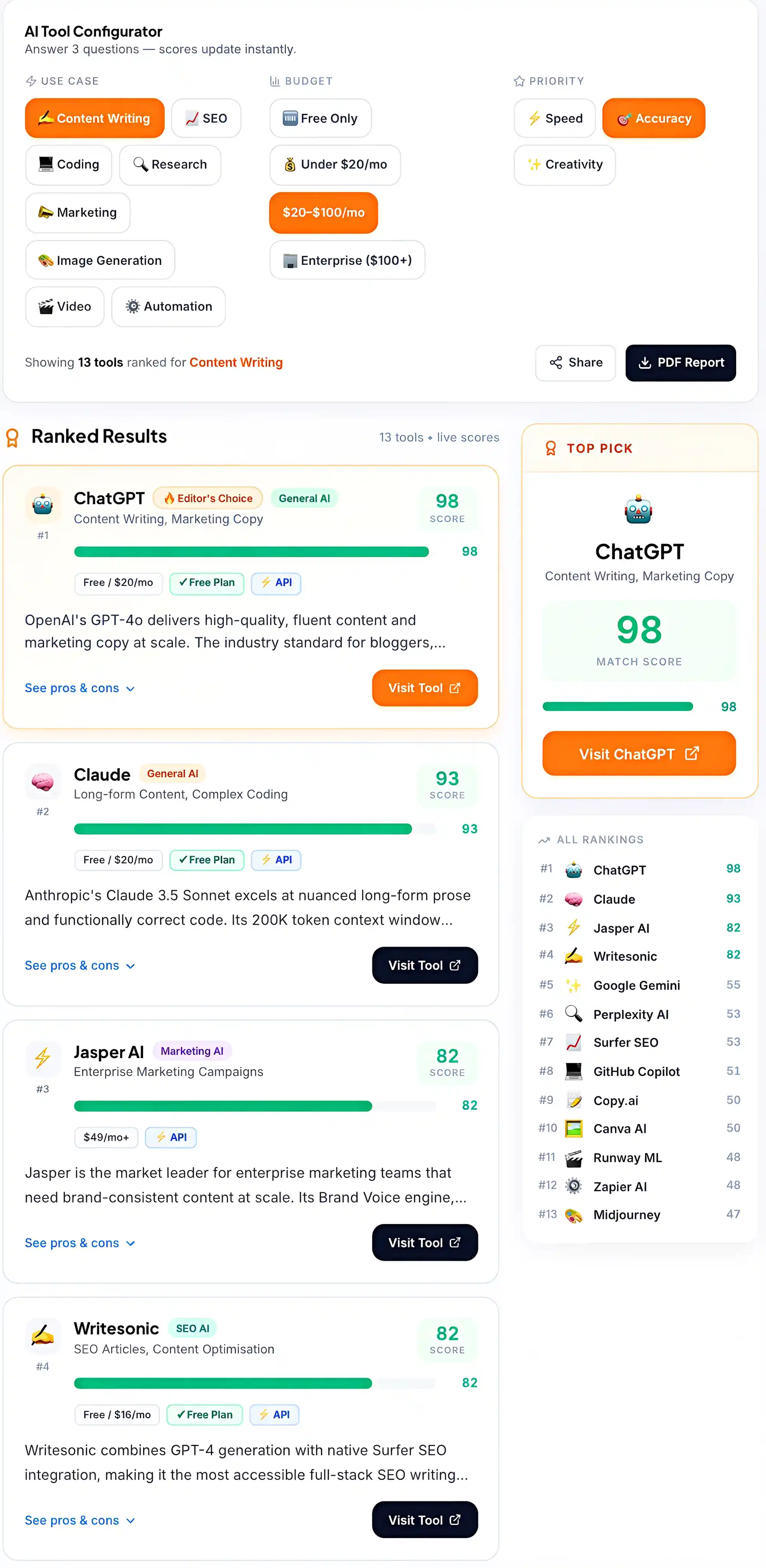
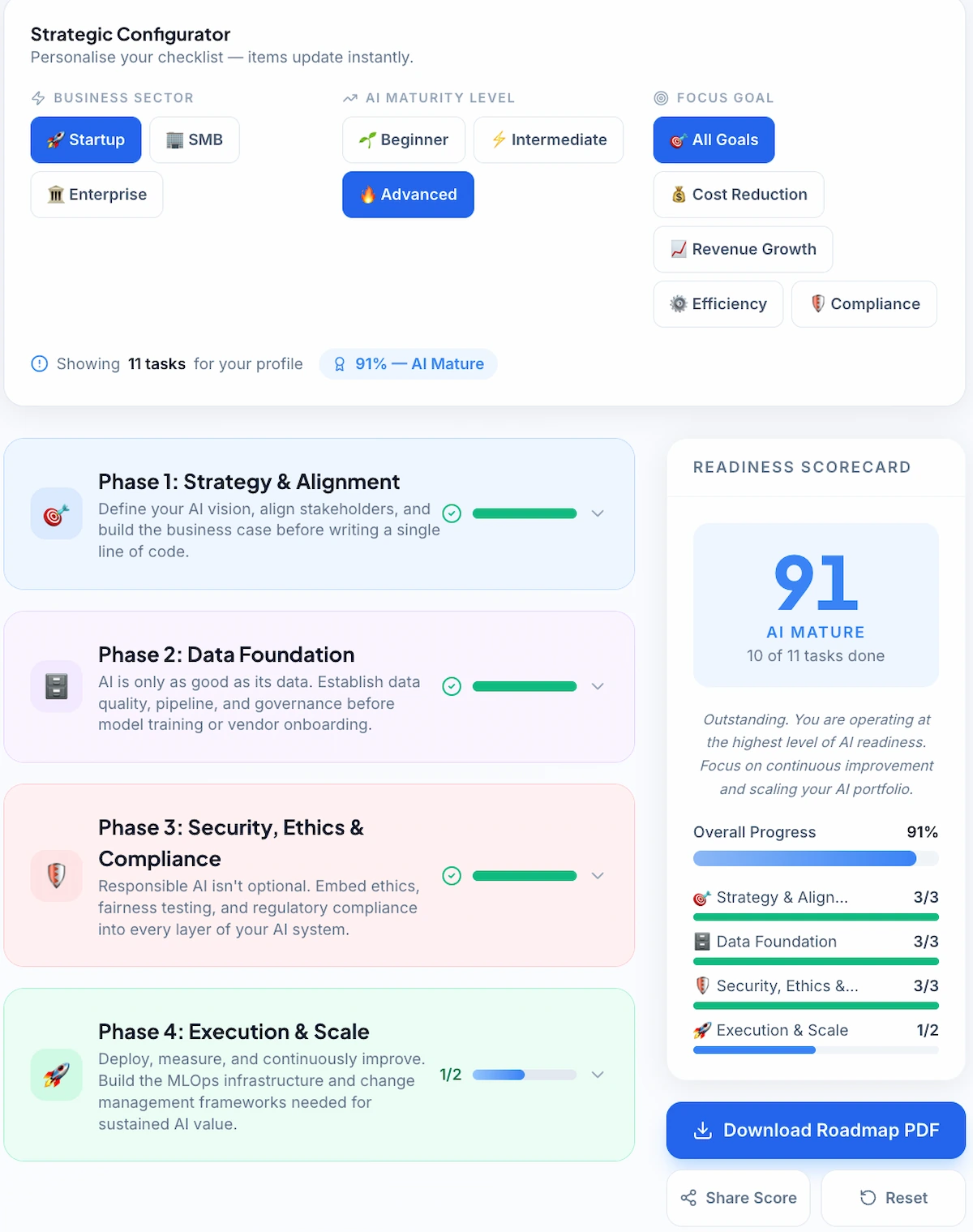
Automated shortlisting result using the Techaigoz Decision Engine.
Key Business Benefits of AI in 2026#
- Cost reduction: Automating manual processes reduces headcount
costs and human error
- Productivity gains: Employees using AI tools complete tasks faster
and focus on higher-value work
- Data-driven decisions: AI surfaces insights from large datasets that
humans would miss
- Competitive advantage: Businesses using AI respond to market
changes faster than those that do not
Strategic Alignment: The HBR Perspective
A key reason for this failure is strategic misalignment. According to research published in Harvard Business Review (HBR), the primary reason AI projects fail is not the technology itself, but a lack of alignment with business goals.
Successful companies treat AI as a "capability multiplier" rather than a standalone IT expense. This reinforces why a structured selection process is non-negotiable in 2026.
AI is no longer just a technology advantage — it is becoming a competitive necessity for modern businesses.
— Industry Technology Report
The Core Problem: Why Most Businesses Choose AI Software Wrong#
With hundreds of tools on the market, choosing the right AI software feels
overwhelming. Some platforms promise instant results. Others require
deep technical expertise or large budgets. Not every solution is built with
small businesses in mind.
The most common failure pattern is straightforward: businesses purchase
tools reactively—driven by competitor pressure or vendor
marketing—without defining the problem the tool must solve, without
establishing measurement frameworks, and without redesigning workflows
to leverage AI effectively.
The result is predictable. Tools go unused. Subscriptions are canceled.
Teams conclude that AI doesn't work for their business—when the actual
failure was in the selection and implementation process, not the technology.
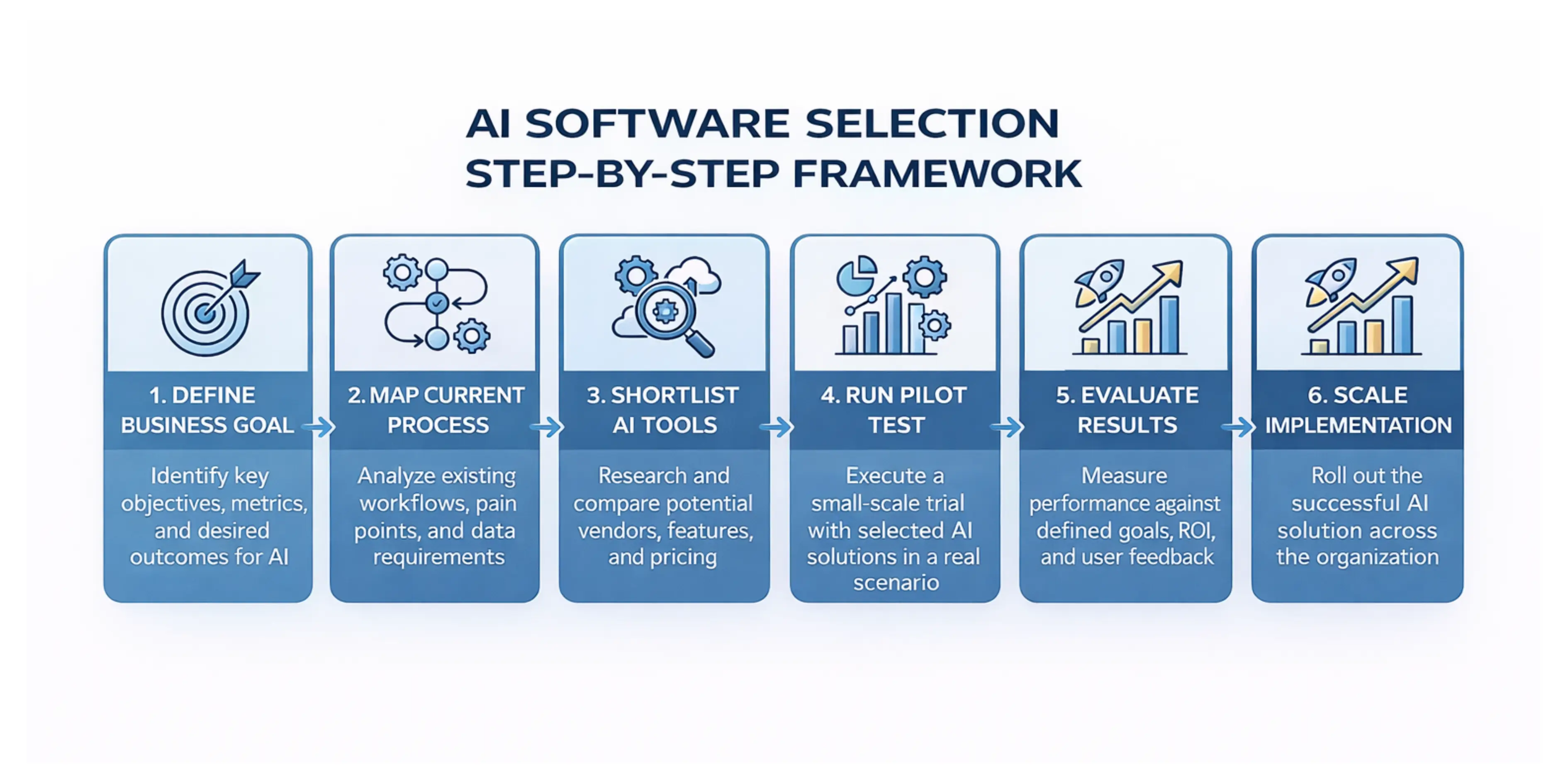
This guide exists to break that pattern. The following sections provide a
complete framework: from understanding what AI software actually does, to
evaluating readiness, selecting tools, running pilots, and scaling what
works.
Complete Concept Explanation: What AI Software Actually Does#
Plain-English Definitions#
Before evaluating tools, it's essential to understand what different types of
AI actually do. The term "AI software" covers a wide range of capabilities,
and confusing them leads to poor purchasing decisions.
Machine Learning (ML) Systems that learn patterns from historical data to
make predictions. Used in demand forecasting, credit scoring, and churn
prediction.
Generative AI Models that create original content—text, images, code, or
audio—from prompts. Powers writing assistants, design tools, and code
copilots.
Natural Language Processing (NLP) Enables computers to understand
and respond to human language. Found in chatbots, voice assistants, and
sentiment analysis tools.
Computer Vision Allows AI to interpret images and video. Used in quality
control, security monitoring, and document scanning.
Predictive Analytics Analyses current and historical data to forecast
outcomes. Commonly used in sales forecasting, inventory planning, and
financial modelling.
Not all AI products are the same. Understanding the difference helps you
match the right solution to your business stage and budget.
SaaS AI tools: Ready-to-use software with AI built in. Low cost, fast
deployment, minimal technical skill required. Appropriate starting point for
most SMBs.
AI integrations: Add-on AI features embedded into existing platforms.
Best for extending tools you already use without replacing them.
Enterprise AI platforms: Comprehensive platforms combining multiple AI
capabilities with customisation. Suitable for larger SMBs with dedicated
technical resources.
Custom AI models: Built from scratch using your own data. Highest cost
and complexity, delivers maximum specificity for unique use cases.
→ Looking for budget-friendly options? Read: Affordable AI Software for Startups (2026 Guide to High-ROI Tools Under $100/Month)